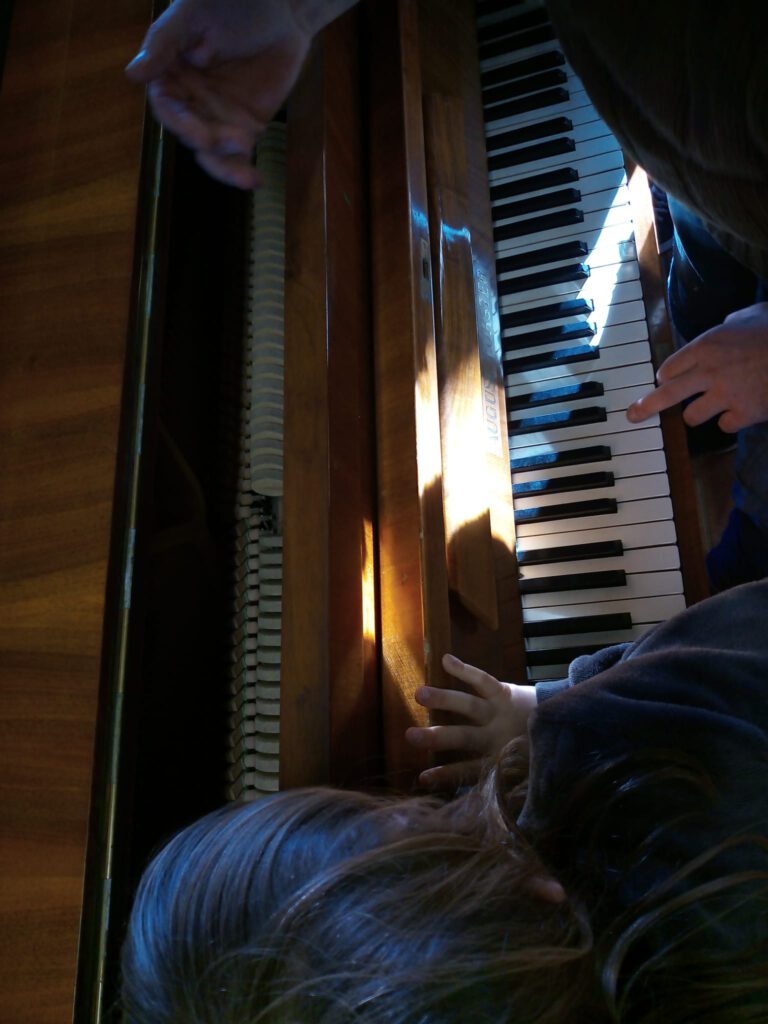
The first meeting of the “Traditional Instruments and Instruments made of Recycle Materials” aimed to introduce elementary school children to the classification of musical instruments and to stimulate their interest in music and crafts through practical and theoretical activities. During this session, the presenter introduced the main types of musical instruments, divided into three categories: aerophones, chordophones and membranophones. Introduction to the Classification of Musical Instruments 1. Aerophones:The first group of instruments presented was the aerophones, which produce sound by air vibrating inside them. The conductor showed the recorder, a classic example of an aerophone. The children had the opportunity to observe the instrument and listen to its sound. Afterwards, they were invited to try playing the flute. The activity provided an understanding of the concept of how air inside a musical instrument can generate sound. 2. Chordophones:The second group of instruments was chordophones, which produce sound through the vibration of taut strings. In this case, the conductor introduced the monochord, an ancient instrument consisting of a single string stretched over a sound box. The children observed how the sound produced changed depending on the tension of the string and were able to experiment with plucking the string to listen for changes in pitch. 3. Membranophones:Finally, membranophones, which produce sound by vibrating a membrane stretched over an instrument, were presented. The presenter used drums as an example of this category. The children were able to observe the drums and listen to how the sound changed depending on the tension of the membrane. Next, a practice session was held in which the children played five drums, each with different tensions. First they tried tapping on each drum with one stick, then they experimented with using two sticks, alternating hands, to perceive how technique affects the sound produced. This activity enabled the children to understand the differences in the sound of the drums and how membrane tension plays a key role in sound production. Piano Observation During the course of the meeting, a brief observation of the school’s piano was also offered. The children had the opportunity to see how the piano key, when pressed, activates a hammer that causes the inner strings to vibrate. This part of the meeting allowed them to understand the concept of how different instruments can function similarly, but with different mechanisms. Creative and Reflective Activity At the end of the hands-on activities, the children were involved in a series of complementary activities: * Report writing: Each child wrote a short report on their activities. This exercise stimulated their observation and reflection skills, consolidating what they learned about musical instruments and how they work. * Drawing musical instruments: As a creative activity, the children colored a drawing depicting various musical instruments. This gave them the opportunity to express their own view of music and instruments, associating the theoretical concepts they learned with their own visual experience. Conclusions The first meeting was an engaging introduction to the classification of musical instruments, combining theory and practice. Children had the opportunity to explore different types of instruments (aerophones, chordophones, and membranophones), understanding the differences in how they function and produce sound. Hands-on experience, particularly with the recorder, monochord and drums, stimulated their interest and made learning more concrete and fun. Writing and drawing activities completed the meeting, allowing children to consolidate information in creative ways.