Italy

Etruscan Jewellery Part III (ITALY)

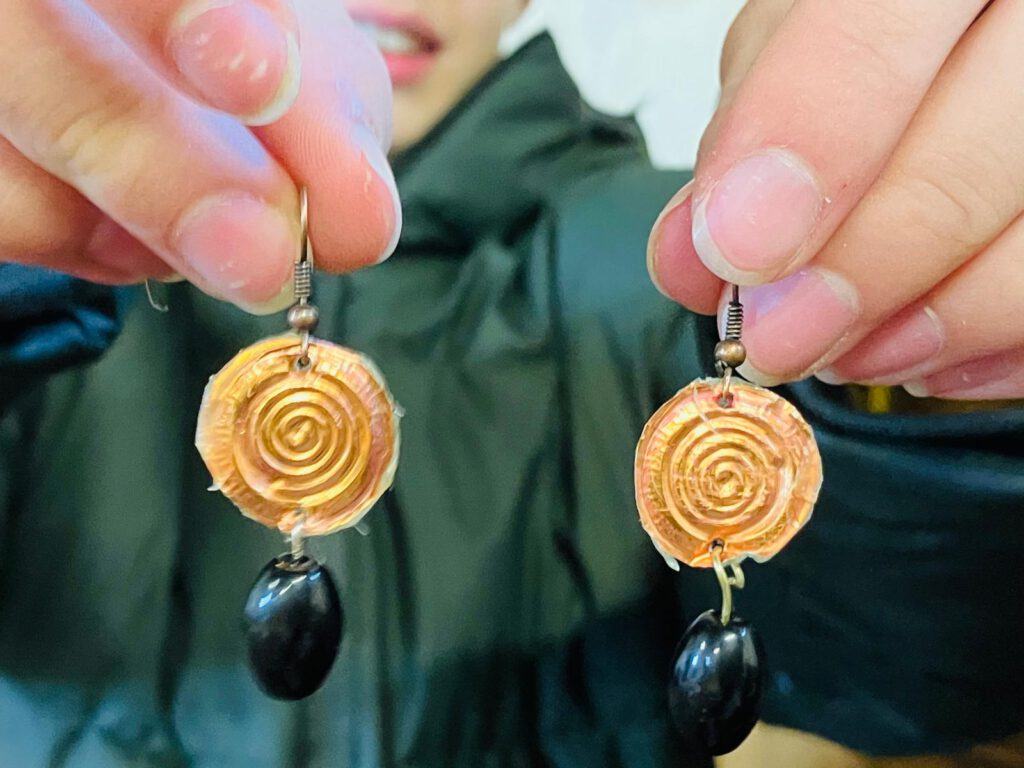
The third meeting of the Erasmus Plus HAND! project, held at the Albero della Tuscia Libertarian School in Farnese (VT), guided children to discover another fascinating artifact of Etruscan goldsmithing: earrings. This jewelry, beloved and worn by Etruscan women, came in different forms, from large plaque earrings, which could reach 7 cm in diameter, to pendants embellished with stones and fine details.After a historical introduction on the types of earrings used by the Etruscans, the children chose to make a pendant model, inspired by ancient jewelry but reinterpreted with a personal touch. For the workmanship, the technique of embossing on copper sheets was used, through which the spiral symbol was engraved. This motif recurs frequently in Etruscan art and symbolizes the continuous cycle of life, growth, transformation and the connection between the earthly and spiritual worlds.After transferring the design to the metal plate, the children engraved the spirals using burins and embossing tools, working carefully to achieve a well-defined relief. The resulting plaque was then personalized by adding a stone of their choice, inspired by the Etruscan custom of embellishing jewelry with precious and colorful materials. To ensure safety and comfort, a thin layer of hot glue was applied to the back, which softened the reliefs and covered any sharp edges. Next, through the use of jewelry pliers, the children assembled their earring, inserting the linking rings and completing it with the monachella, the hook that allows it to be worn.This workshop, too, offered children an immersive, hands-on experience, allowing them to explore Etruscan culture through craftsmanship and art. Working with metal, engraving ancient symbols and assembling a real piece of jewelry turned history into a hands-on experience, leaving them with not only an object to wear, but also an awareness of the artistic and symbolic value of jewelry from the past.

Etruscan Jewellery Part III (ITALY) Read More »
Etruscan jewelry Part II (ITALY)

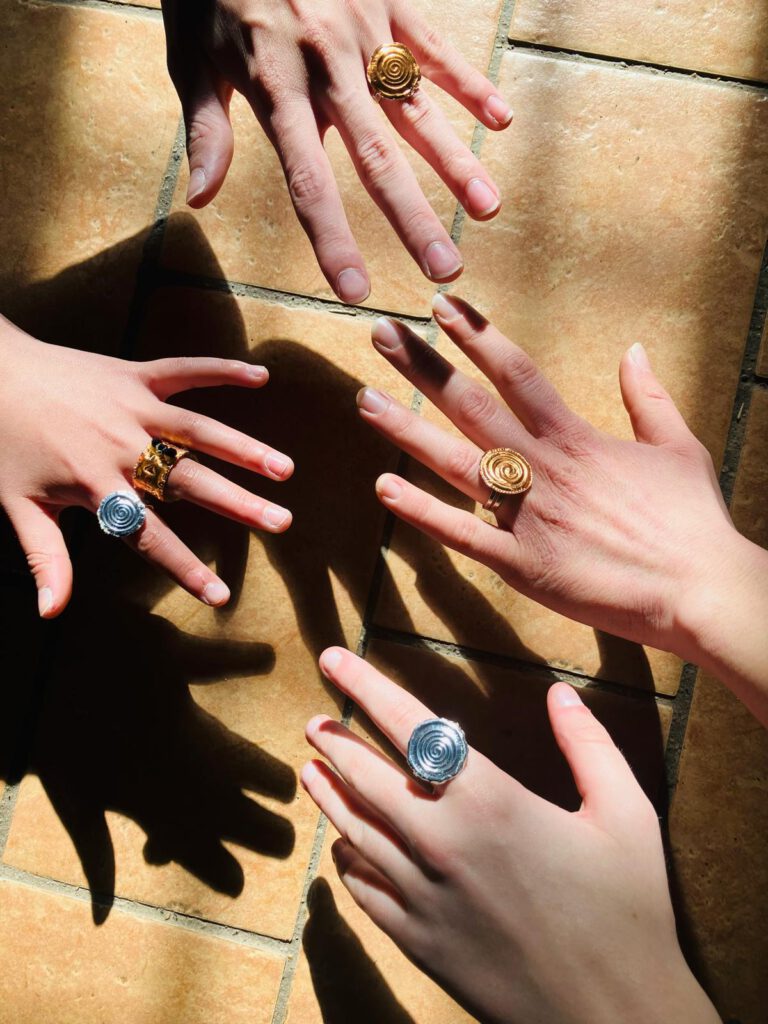
After the exciting discovery of Etruscan jewelry during the first meeting, the children of the Libertarian School “Albero della Tuscia” in Farnese (VT) continued their journey into the world of goldsmithing, experimenting with new techniques for making two types of rings: a band ring and a plate to be applied on a ring base.Also in this meeting, guided by Marianna Iurlo, the children worked with the embossing technique, choosing between copper plates or silver-plated bases, depending on their aesthetic preferences. The band ring was decorated with a design made freehand, then traced using burins to create a well-defined relief. Someone also applied black corallines to further embellish and personalize the work.The plate of the second ring, on the other hand, was obtained by tracing the relief motif of a jewel depicting a Spiral, a recurring symbol in Etruscan art. This motif was particularly significant to the Etruscans because it represented the cycle of life, fertility and prosperity, as explained in the previous meeting.Once the relief was imprinted on the slab, the piece was treated with hot glue to stabilize the workmanship and finally glued to the base of the ring, thus completing the creation. The meeting allowed the boys and girls to hone their manual skills and deepen their understanding of the symbolic value of Etruscan goldsmithing, transforming learning into a practical and creative experience. Through craftsmanship, they were able to experience firsthand the attention to detail and precision required for jewelry making, while developing a deeper connection to the history and art of antiquity.

Etruscan jewelry Part II (ITALY) Read More »

Etruscan jewelry (ITALY)

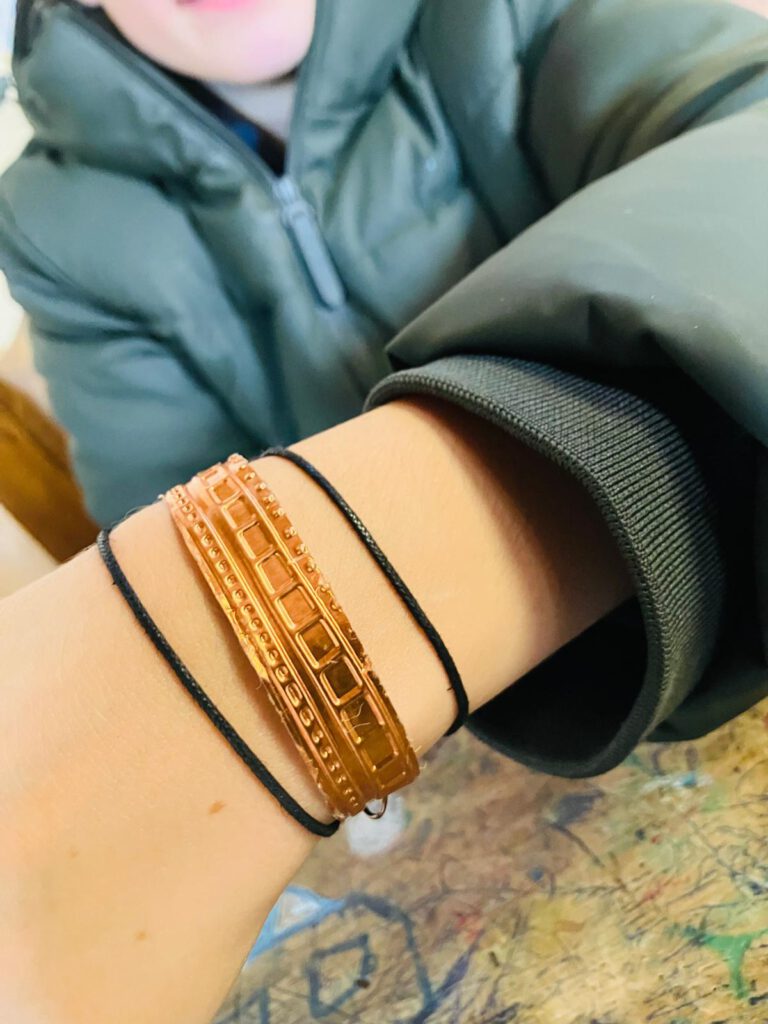
During the first meeting of the Erasmus Plus HAND! project at the Libertarian School “Albero della Tuscia” in Farnese (VT), elementary school children embarked on a fascinating journey to discover Etruscan jewelry. The presenter, Marianna Iurlo, told the story of the Etruscans, the ancient people of central Italy known for their skill in the art of goldsmithing, and explained how jewelry was not mere ornaments, but authentic symbols of wealth, protection and spirituality.The boys and girls learned that these precious objects, made of gold, silver, bronze, amber, and semi-precious stones, were embellished with refined techniques such as filigree, granulation, and especially embossing, which allows the creation of three-dimensional reliefs on metal. During the presentation, special attention was paid to the meaning of the symbols: the Sun represented life, light and energy, while the Moon was associated with the mysterious passage into the afterlife; the Serpent represented protection and renewal, the Eagle expressed power and connection with the heavens, and the Horse evoked nobility and strength. In addition, the Circle and Spiral recalled the continuous cycle of life, fertility and prosperity, while plants and flowers engraved on jewelry suggested rebirth and abundance. Some jewelry even featured formulas or incantations, intended to protect the wearer and connect the earthly world to the divine. To make this journey through time even more tangible, photographs of jewelry found in Etruscan tombs and housed in the Vulci museum were shown, giving children a direct visual connection to the past. Next, participants put what they learned into practice by making a band bracelet. Using a copper plate, the children experimented with the embossing technique: with the help of a die-cutting machine, a relief design was imprinted, which was then refined with burins to define the details. During the making of the bracelet, hot glue was used to fill in the reliefs and make the edges of the foil less sharp, thus providing greater security. In addition, through the use of jeweler’s pliers, terminals were applied to the bead and connector rings inserted, for an accurate and professional finish.This first meeting, aimed to combine learning about Etruscan history and culture with the direct experience of metalworking, strengthening the children’s sense of cultural belonging and creativity. A course that transformed knowledge into a concrete experience, stimulating creativity, teamwork and the discovery and appreciation of the artistic and historical heritage of the past.

Etruscan jewelry (ITALY) Read More »

A second Paper Journey: From A3 to a Tiny Treasure (ITALY) 07-03-2025

The bookbinding adventure of the second group also began with a deep dive into paper formats. We meticulously folded and measured an A3 sheet, observing how it diminished in size with each fold, all the way down to the minuscule A9. After diligently recording the dimensions of each format, we embarked on our first project: a miniature A9 notebook. Bertie showed us how a professional cutting machine can cut a pile of A4 paper into A8 sheets. We gave all the measurements during the cutting of the paper according to our previously made example. With patience, we then folded 24 A8 sized papers in half to create three “signatures” for our notebook. We were then free to select a cover paper and adorn it with a little charm. The only thing left to do was unite both the cover and the signatures to create a tiny treasure.   In the second half of the lesson we worked on the fairytale book that the first group had already started. Each of us added a nice illustration on one of the pages, becoming part of a shared creative endeavor.

A second Paper Journey: From A3 to a Tiny Treasure (ITALY) 07-03-2025 Read More »

Musical Instruments – Part 3 (ITALY)

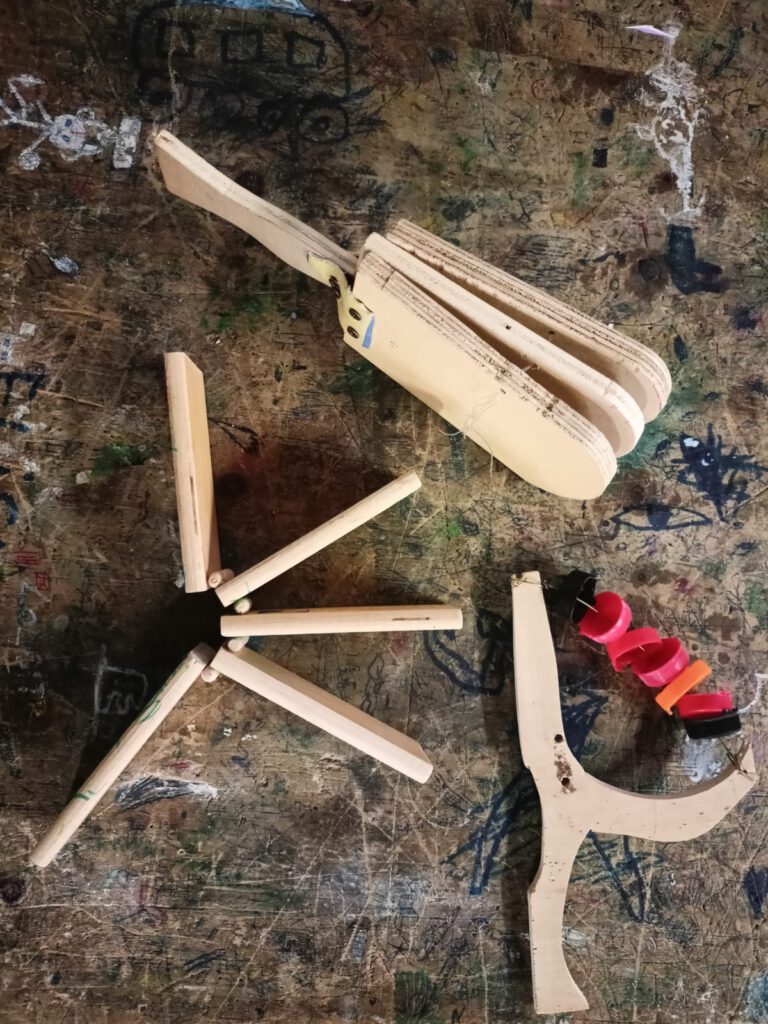
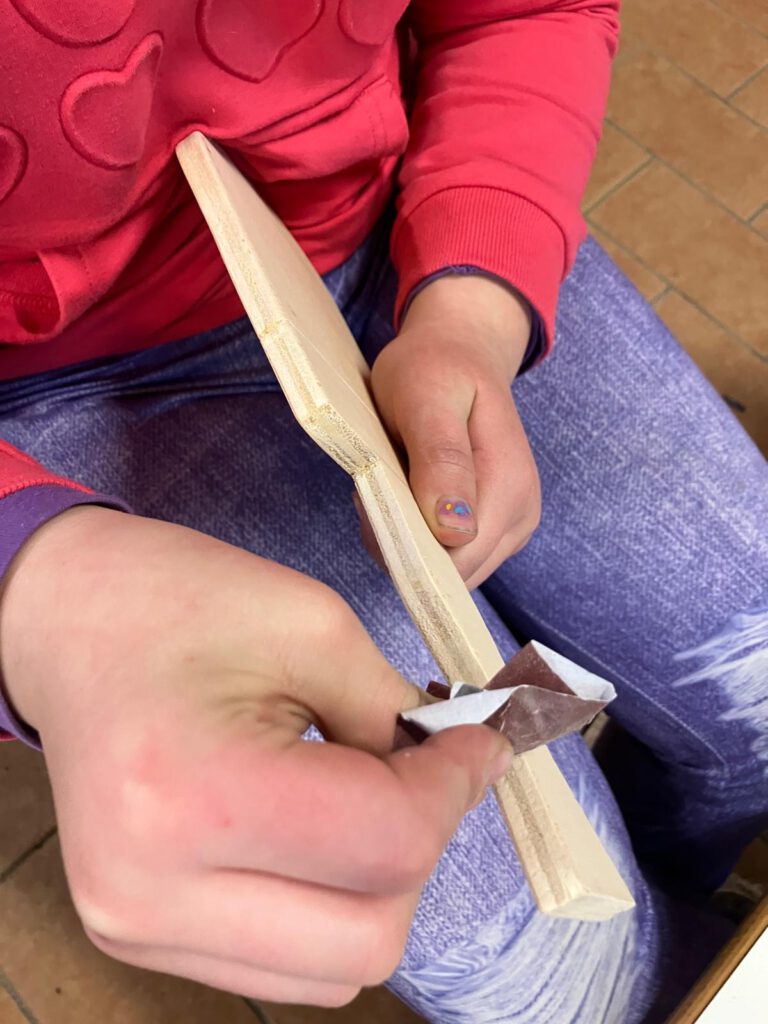
The third and final meeting of the Erasmus Plus Project – HAND! at the Albero della Tuscia School in Farnese (VT) took place in a serene and playful atmosphere, demonstrating how collaboration and creativity can transform recycled materials into real musical instruments. During this lesson, the children began by drawing their own ideas for instruments, letting their imaginations run wild. The preparation of the materials was guided by the conductor, but it was soon evident as the increasingly close-knit group organized themselves for a time of ensemble music, this time without the conductor’s guidance. After the musical experimentation phase, the boys and girls continued to refine the instruments, working the wood through scraping and sanding operations, and using working tools such as a drill under careful supervision. This phase allowed them to acquire new technical skills as they decorated with markers the different parts that would make up the sistrum and the two types of clap clap. In addition to strengthening manual skills, the experience fostered teamwork and autonomy, leaving each participant with an awareness of the importance of a creative and sustainable approach.

Musical Instruments – Part 3 (ITALY) Read More »

A fairytale book with a gold cover image (ITALY) 07-02-2025

We continued work on our fairytale book project in the last session of our bookbinding course. We focused on illustrating the ceramics-themed story and creating the cover. Red fabric was used to cover the greyboard, forming a rich backdrop for the cover design. Fabian created a striking image, which was then cut from gold foil and heat-pressed onto the cover. The result is truly captivating. We ended the lesson by signing the book as real authors and illustrators. The second group taking the bookbinding course in March will complete the illustrations and bind the book.

A fairytale book with a gold cover image (ITALY) 07-02-2025 Read More »

How local 500 year old books were binded (ITALY) 31-01-2025

This week, we visited the Palazzo Farnese in Gradoli to explore the municipality archives and learn about medieval bookbinding. We examined a 16th-century book severely damaged by mold. Its crumbling pages and hole-ridden cover emphasized its age. Our guide, Mario, explained the abundance of such books in Italy, many housed in local archives and containing administrative information of limited historical significance. Restoring this particular book would cost over €5,000 and take a year, resources unfortunately unavailable for such less-historically-important volumes. Within the archive, we examined numerous other books, most bound using a Coptic stitch. The covers were primarily made of leather or sheepskin parchment, reflecting the prevalence of sheep farming in the region. Following this fascinating glimpse into the past, we returned to our workshop to complete the sketchbooks we began last week. Our process involved covering greyboard with fabric and then adhering the book block to the cover.   And finally we started on drawing the illustrations of our fairytale book about ceramics.

How local 500 year old books were binded (ITALY) 31-01-2025 Read More »

Traditional book components to a modern sketch book (ITALY) 24-01-2025

Today, we delved into the ancient art of bookbinding by learning the Coptic stitch, one of the earliest and most enduring methods. We meticulously bound our carefully cut signatures using a single, long thread. This process demanded our full attention, but the satisfaction of creating a complete book with our own hands was immense. Following the tradition of illuminated manuscripts, we designed and crafted our own unique initials for the first page of our journals. Just as in historic books, these initials serve as a captivating introduction to each chapter. We carefully considered the design of our initials, ensuring they complemented the chosen cover cloth.   Next week, we will finish our journals by creating their covers, adding the final touch to these handcrafted treasures.

Traditional book components to a modern sketch book (ITALY) 24-01-2025 Read More »

Musical Instruments & Recycling Part 2 (ITALY)

The second meeting of the musical instruments workshop saw the introduction of new children, for whom a brief summary of the activities conducted during the previous meeting was given. In particular, the experience of playing the drums in sequence was reintroduced, starting with one stroke on each drum and continuing with two strokes alternating hands, maintaining a regular pulse. This activity allowed the children to consolidate their acquired knowledge, improving their coordination and sense of rhythm. The children also revisited the operation of the piano, exploring again the mechanism of the strings for sound production. An interesting part of the meeting was devoted to experimenting with a corrugated pipe, which, when spun, emitted a sound similar to that of a propeller flute. The children found that varying the speed of rotation of the tube changed the pitch of the sound. The conductor then introduced the sistrum, a musical instrument from ancient Rome, constructed from recycled materials: a hanger to which plastic caps were attached. The children enjoyed the creative use of materials and began to reflect on the art of building musical instruments with sustainable resources. The practical part of the meeting was devoted to instrument making. The children started making a sistrum and a clap clap, using wood that was cut by the conductor with a circular saw. While working to prepare the materials, the children also drew the plans for their instruments. Next, they sanded the pieces of wood that will make up the instruments, an activity that stimulated their manual dexterity and attention to detail. The meeting concluded with a session of ensemble music, during which the children played drums, collaborating to create a common rhythm and experiencing the value of music as a collective experience. In summary, the second meeting allowed the children to explore new instruments, consolidate practical and theoretical knowledge, and further approach the art of building recycled musical instruments. The day was full of creativity, hands-on learning and fun,.

Musical Instruments & Recycling Part 2 (ITALY) Read More »

Musical Instruments and Recycling (ITALY)

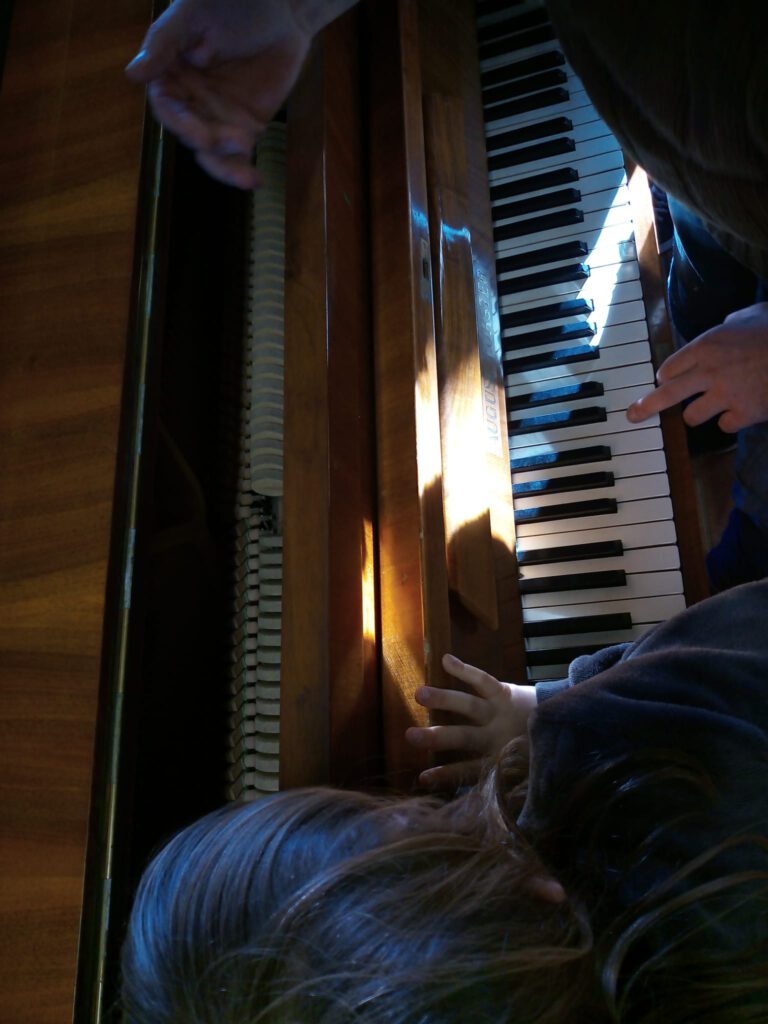
The first meeting of the “Traditional Instruments and Instruments made of Recycle Materials” aimed to introduce elementary school children to the classification of musical instruments and to stimulate their interest in music and crafts through practical and theoretical activities. During this session, the presenter introduced the main types of musical instruments, divided into three categories: aerophones, chordophones and membranophones. Introduction to the Classification of Musical Instruments 1. Aerophones:The first group of instruments presented was the aerophones, which produce sound by air vibrating inside them. The conductor showed the recorder, a classic example of an aerophone. The children had the opportunity to observe the instrument and listen to its sound. Afterwards, they were invited to try playing the flute. The activity provided an understanding of the concept of how air inside a musical instrument can generate sound. 2. Chordophones:The second group of instruments was chordophones, which produce sound through the vibration of taut strings. In this case, the conductor introduced the monochord, an ancient instrument consisting of a single string stretched over a sound box. The children observed how the sound produced changed depending on the tension of the string and were able to experiment with plucking the string to listen for changes in pitch.   3. Membranophones:Finally, membranophones, which produce sound by vibrating a membrane stretched over an instrument, were presented. The presenter used drums as an example of this category. The children were able to observe the drums and listen to how the sound changed depending on the tension of the membrane.   Next, a practice session was held in which the children played five drums, each with different tensions. First they tried tapping on each drum with one stick, then they experimented with using two sticks, alternating hands, to perceive how technique affects the sound produced. This activity enabled the children to understand the differences in the sound of the drums and how membrane tension plays a key role in sound production.   Piano Observation During the course of the meeting, a brief observation of the school’s piano was also offered. The children had the opportunity to see how the piano key, when pressed, activates a hammer that causes the inner strings to vibrate. This part of the meeting allowed them to understand the concept of how different instruments can function similarly, but with different mechanisms.   Creative and Reflective Activity   At the end of the hands-on activities, the children were involved in a series of complementary activities:   * Report writing: Each child wrote a short report on their activities. This exercise stimulated their observation and reflection skills, consolidating what they learned about musical instruments and how they work.   * Drawing musical instruments: As a creative activity, the children colored a drawing depicting various musical instruments. This gave them the opportunity to express their own view of music and instruments, associating the theoretical concepts they learned with their own visual experience.   Conclusions   The first meeting was an engaging introduction to the classification of musical instruments, combining theory and practice. Children had the opportunity to explore different types of instruments (aerophones, chordophones, and membranophones), understanding the differences in how they function and produce sound. Hands-on experience, particularly with the recorder, monochord and drums, stimulated their interest and made learning more concrete and fun. Writing and drawing activities completed the meeting, allowing children to consolidate information in creative ways.

Musical Instruments and Recycling (ITALY) Read More »