Woodwork

Wooden Games Part III (ITALY)

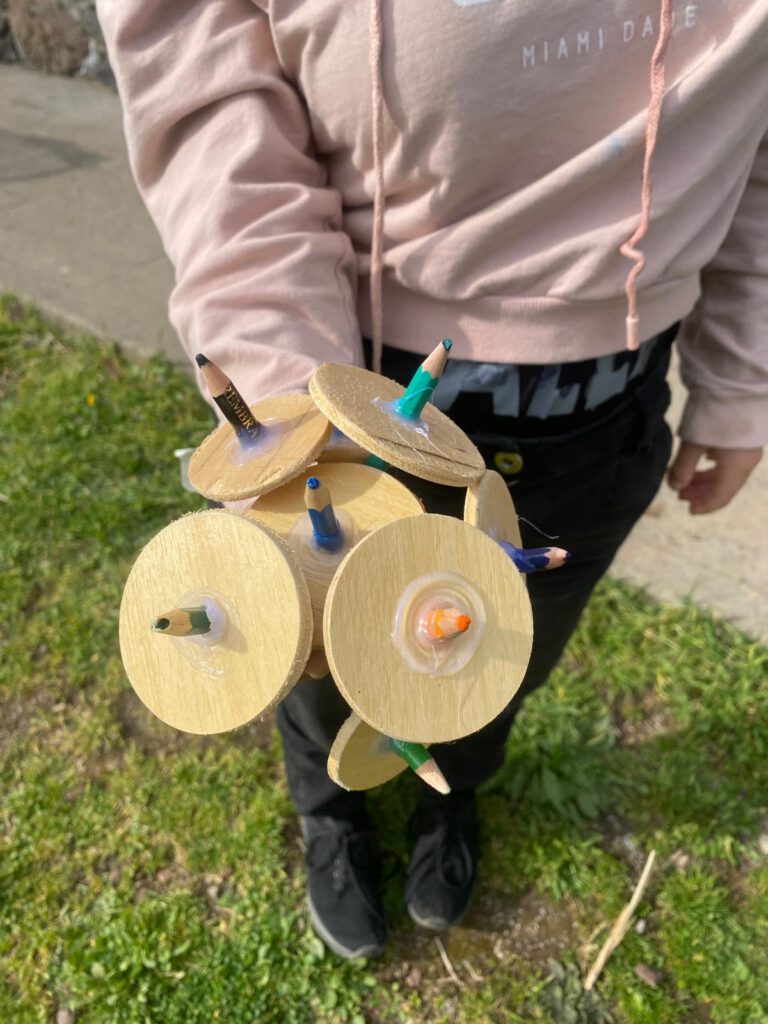
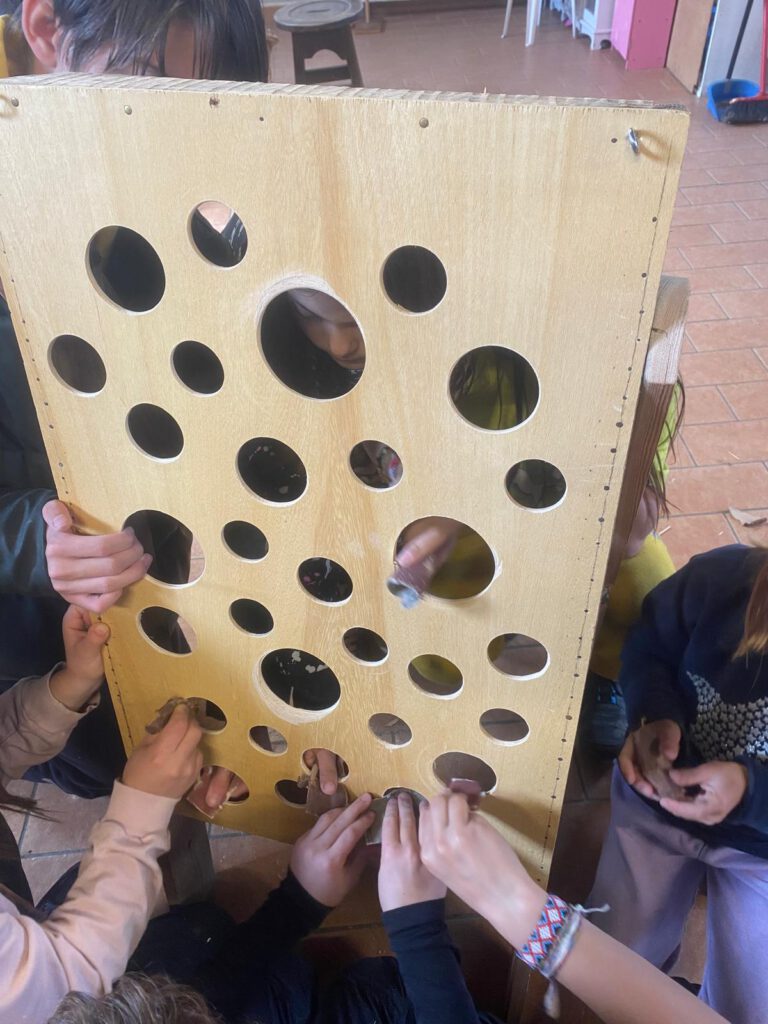
Today we completed the first two games and created wooden spinning tops that color, made of the leftovers of the second game. To finish the started project of last week we sanded the entire structure of the Hollabyrinth from the wooden bases, to the holes drilled with the drill bit, through the help of a string and fastening hooks we proceeded to make the play tool where the ball moves to play the game.The whole thing was assembled and put into operation with excellent results. With the plywood circles obtained from cutting wood to make the hollabyrinth, we made wooden spinning tops that color.We sanded the circles, glued the circles into a sharpened colored pencil and the play tool is ready. We made a spinning top that colors.

Wooden Games Part III (ITALY) Read More »
Wooden Games Part II (ITALY)

Today we started making a game invented by Alexander called Hollabirinto. The game consists of a path of holes made in a wooden plank placed vertically where a marble has to manage to make it all the way through without falling into the holes, a game that relates mental and manual skills. We made the base of the game by nailing a wooden plank of plywood onto a square rectangular base. Alexander explained how to properly use a drill to bore wood and especially the use of drill bits, an essential tool for making precise circular holes of different sizes. Several holes were drilled with the hole drill to create the path of the labyrinth, a wooden stand was then created to hold the previously created labyrinth vertically.

Wooden Games Part II (ITALY) Read More »

Shingle Roof Workshop (ESTONIA)

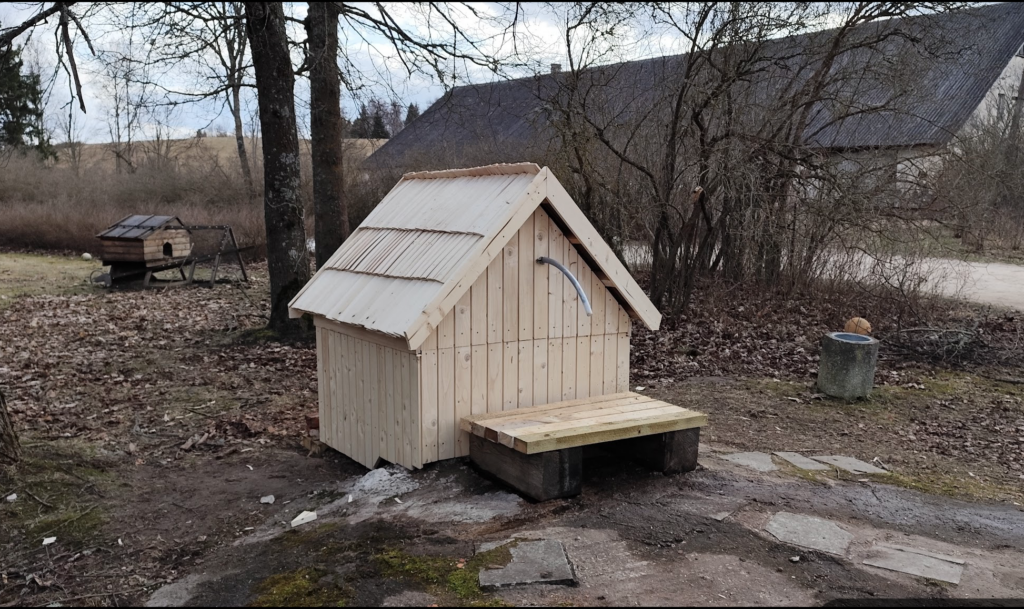
In the workshop, we learned how to craft a roof from natural wood shingles. The children got to try their hand at cutting and installing shingles themselves. The instructor demonstrated how to place the shingles at the correct angle to make the roof watertight. We used traditional tools like hammers and nails to securely fasten the shingles. Each child built a small model roof that they could take home. We learned which types of wood are best suited for a shingle roof. We talked about how a shingle roof changes over time and what maintenance it requires. Through a fun game, we learned the different parts of a roof and their names. Together, we admired the beauty and naturalness of the finished shingle roof. The children left the workshop with new skills and knowledge of traditional crafts. In Estonia, shingle roofs have a long history, being a traditional roofing material, especially in rural areas. The skills of building shingle roofs have been passed down from generation to generation, thereby preserving a valuable cultural heritage.  

Shingle Roof Workshop (ESTONIA) Read More »

Traditional wooden Games Part I (ITALY)

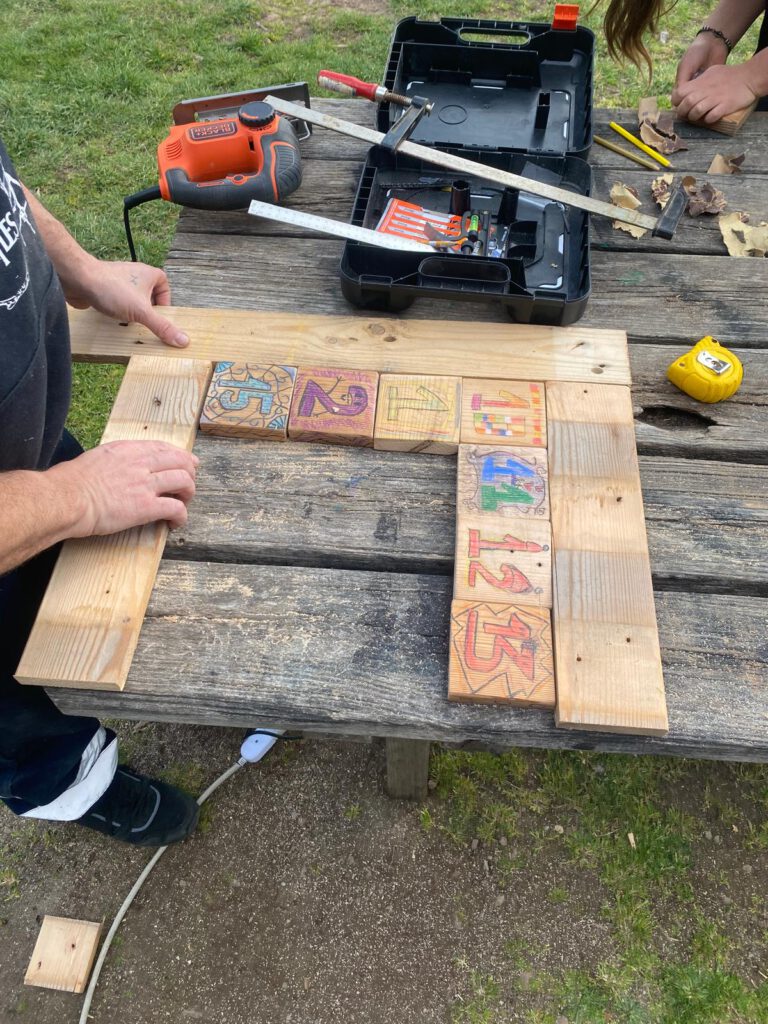
Alexander proposed the realization of the game of 15 which is a classic puzzle game created in 1874 by Noyes Palmer Chapman, a letter carrier on duty in Canastosa, and popularized in 1891 by samuel Loyd.The game consists of a square-shaped board, usually made of plastic or wood, divided into four rows and four columns (thus sixteen positions), on which are placed fifteen square tiles, numbered progressively from 1. The tiles can slide horizontally or vertically, but their movement is limited by the existence of a single blank space. The aim of the game is to rearrange the tiles after “shuffling” them randomly; the position to be reached is the one with the number 1 at the top left and the other numbers following from left to right and from top to bottom, up to 15 followed by the empty square. The children began by squaring the wood to be cut through the use of a carpenter’s square and marked with pencil all the dowel cuts needed for the game. Afterwards, Alexander explained and showed the correct use of the hand saw with which all the boys cut the 15 dowels. After cutting, the dowels were sanded with sandpaper of different weights, first a larger weight was used to remove impurities from the larger cut wood and then finished with a much finer weight. At this point we got 15 squares sanded and ready to be painted by the children, each with their own imagination, where the numbers one to fifteen were made. Same procedure to make the game frame, first they did the cutting, then the sanding and finally the painting. We prepared all the materials needed to assemble the game and put them together. 

Traditional wooden Games Part I (ITALY) Read More »